Swiss Machining and Precision Fastener Manufacturing: Engineering Accuracy in Modern Production
In modern manufacturing engineering, precision is no longer a differentiator—it is a fundamental requirement. As industries such as medical devices, automotive systems, electronics, and industrial automation continue to evolve, the demand for small, complex, and highly accurate components has increased significantly. Meeting these requirements consistently depends on advanced machining technologies and experienced engineering-driven manufacturers.
Among all precision manufacturing methods, Swiss machining remains one of the most effective solutions for producing high-tolerance cylindrical parts at scale.
Swiss Machining as a Core Precision Manufacturing Process
Swiss machining, often referred to as Swiss screw machining, was originally developed to meet the extreme accuracy demands of watchmaking. Today, it has become a critical production method across multiple industrial sectors due to its ability to maintain tight tolerances on long, slender, and complex components.
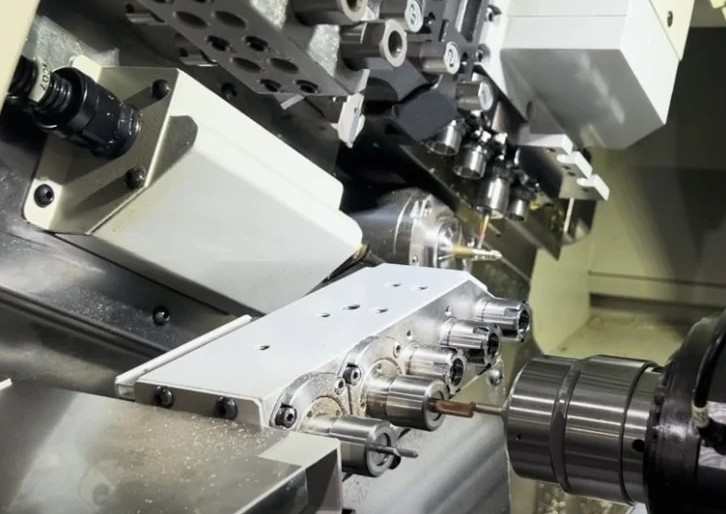
The defining feature of Swiss machining is the use of a guide bushing that supports the workpiece close to the cutting area. This minimizes vibration and material deflection during cutting, allowing for superior dimensional control and surface quality. Compared to conventional CNC turning, Swiss machining enables multiple operations—turning, drilling, milling, threading, and grooving—to be completed in a single setup.
For manufacturers producing high-precision components in medium to high volumes, Swiss machining services offer a practical balance between efficiency, accuracy, and repeatability. This approach not only improves part quality but also reduces production lead time and cumulative machining errors.
Precision Pins and Shafts in Mechanical and Industrial Applications
Pins and shafts may appear to be simple mechanical elements, but in practice they play critical roles in alignment, load transfer, and motion control. These components are widely used in assemblies for medical instruments, aerospace systems, automation equipment, and precision machinery.
Manufacturing high-quality pins and shafts requires strict control over diameter consistency, straightness, concentricity, and surface finish. Any deviation can lead to premature wear, vibration, or assembly failure. Swiss machining is particularly well-suited for producing these components due to its ability to maintain stability across long machining lengths.
Specialized manufacturers offering precision pins and shafts manufacturing focus not only on dimensional accuracy but also on material selection and secondary processing. Stainless steel, alloy steel, aluminum, and titanium are commonly used depending on the application, often combined with heat treatment, polishing, or coating to enhance performance and durability.
Bolts and Nuts: Engineered Fasteners, Not Commodity Parts
In industrial manufacturing, bolts and nuts are far more than standard off-the-shelf components. In critical applications—such as automotive assemblies, industrial machinery, and energy systems—fasteners must meet exacting specifications for strength, thread accuracy, and fatigue resistance.
Swiss machining enables the production of high-precision fasteners with consistent thread profiles and tight tolerances. This is especially valuable for custom or non-standard designs where reliability and repeatability are essential. Precision manufacturing also allows better control over surface finish, which directly affects torque performance and long-term joint stability.
Manufacturers specializing in custom bolts and nuts typically integrate advanced quality control systems, including in-process inspection and statistical process control. These practices help ensure that each batch meets engineering drawings and international standards, reducing the risk of failure in real-world operating conditions.
Engineering Expertise Behind Precision Machining
Precision machining is not solely defined by equipment—it is driven by engineering expertise. Experienced machining partners understand how tooling strategy, cutting parameters, and material behavior interact throughout the manufacturing process. This knowledge allows them to optimize part designs for manufacturability, reduce scrap rates, and improve overall cost efficiency.
In industries with strict regulatory and performance requirements, engineering-driven manufacturers also provide documentation, traceability, and quality assurance processes that support long-term product reliability.
The Role of Swiss Machining in Future Manufacturing
As products continue to become smaller, lighter, and more complex, Swiss machining will remain a cornerstone of precision manufacturing. Combined with automation and data-driven quality systems, it supports scalable production without sacrificing accuracy.
For OEMs and system integrators, partnering with manufacturers that offer advanced Swiss machining capabilities and deep engineering experience is a strategic investment—one that directly impacts product performance, reliability, and market competitiveness.