What Manufacturing Evidence Should Travel With a Modular Stormwater System
An industrial buyer rarely purchases a modular stormwater system as a visible finished product. The StormTank module is shipped, assembled, wrapped, connected, buried, and then expected to perform inside a project-specific envelope. By the time an asset owner sees a problem, the manufacturing label, packing record, installation sequence, and selected module grade may be far from the site.
That makes handoff evidence part of product quality. A headline claim about load or material can be useful, but only when the buyer can connect it to the exact model, batch, drawing, and intended application. Otherwise, impressive documents may travel with the shipment while the site team still cannot answer which crate was ordered, why it was selected, or how its data was used.
A strong manufacturing package creates traceability from the project brief to the factory release and onward to installation acceptance. It does not pretend that factory quality control replaces hydraulic or structural design. Instead, it gives each responsible party reliable information at the point where that information is needed.
Translate the project brief into a manufacturing definition
Every order should identify more than a generic modular stormwater system. It should state the selected StormTank module family or grade, material option where relevant, dimensions, connector and accessory scope, quantity basis, packing method, applicable drawings, and the project conditions that informed selection. If a substitution is proposed, the changed data should return to the design team before factory release.
Storm Manage frames its engineering workflow around defining the water-management objective, screening site constraints, configuring module height, footprint, envelope, outlet, and access, then documenting the model-specific drawing, test scope, packing plan, and quotation. This sequence creates a direct bridge between the project need and the manufacturing definition instead of letting a catalogue code stand alone.
Keep that bridge in the stormmanage.com order record. It can refer to an approved configuration sheet containing the project identifier, revision, target application, module code, grade, material statement, accessories, and document list. A purchasing-system description such as “plastic drainage crates” is too weak for an engineered buried asset because it cannot distinguish a reviewed configuration from a convenient stock alternative.
Change control matters even when the replacement appears equivalent. A different height can alter footprint and cover. A different grade can affect the structural check. Different connectors or plates can affect assembly. The manufacturer should state the proposed change, while the project’s designated owner decides whether it is acceptable.
Connect test evidence to the ordered model
Test reports should be read for scope, not just results. The buyer needs to know what component or assembly was tested, the material and condition, the method, loading orientation, duration, temperature where relevant, laboratory or witness, report date, limitations, and relationship to the current product. A high value printed on a sales sheet cannot answer those questions.
The same discipline applies to standards and certificates. A certificate may describe a quality system, material characteristic, or product test. These are different forms of evidence. Procurement should record what each document supports and avoid turning a narrow result into a system-wide promise. The project engineer can then decide how the relevant properties enter the design.
Water UK’s design and construction guidance describes underground tanks as structures that create temporary storage voids and points designers toward specialist structural and geotechnical guidance for modular geocellular systems. The implication for manufacturing evidence is clear: module data must be suitable for use within a buried-system assessment, not presented as if a single factory test approves every cover, ground, traffic, and groundwater condition.
Where evidence is representative rather than batch-specific, say so. Where the factory performs routine dimensional, weight, visual, or material checks on production, distinguish those records from third-party type testing. Transparency makes the quality file more useful. It lets the buyer see what was established for the product design, what was checked on the batch, and what still belongs to site inspection.
Make quality control visible at release
A release record should tie the manufactured batch to measurable acceptance criteria. Depending on the agreed scope, that may include component identity, dimensions, weight tolerance, material declaration, appearance, connector fit, assembly sampling, packaging condition, and quantity reconciliation. The exact list should follow the product and contract rather than a universal template.
Storm Manage’s on-site detention design and installation page describes injection-moulded modular production, virgin and recycled polymer options, batch quality control for compression performance, dimensional tolerance and unit weight, technical drawings, and container-loading plans. Those categories give an industrial buyer a useful starting point for asking which checks apply to the selected StormTank module and what evidence will accompany the shipment.
A stormmanage.com release record should also identify deviations and their disposition. Silence is not evidence that production was perfect. A controlled record can show what was observed, who reviewed it, whether rework occurred, and which units were accepted. This allows quality control to function as a decision process rather than a folder of polished certificates.
Photographs can support identification and packing condition, but they should not replace measurements or reports. Similarly, a factory video may demonstrate capability without proving that the project batch received the specified checks. Each evidence type should be used for the question it can actually answer.
Design the packing record for site verification
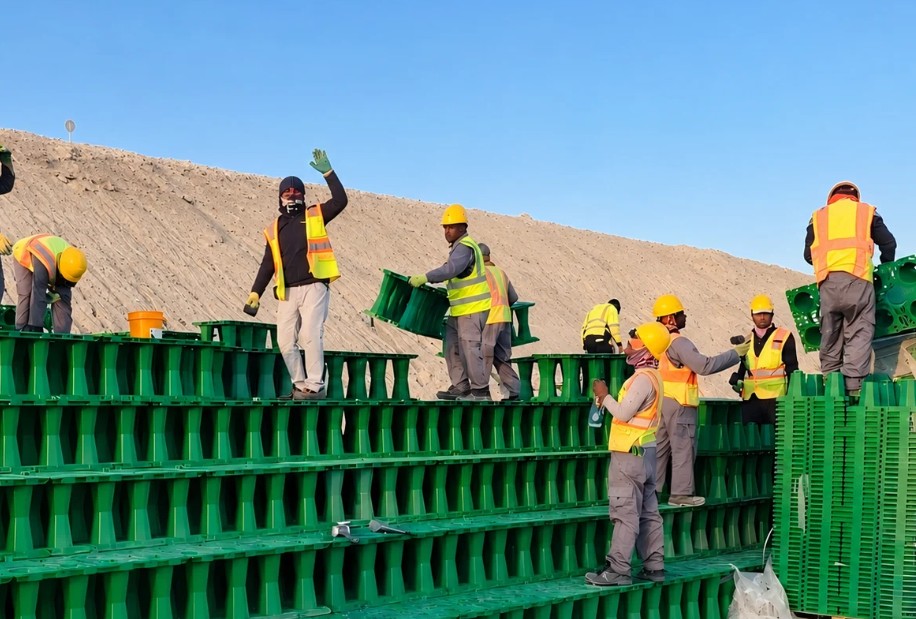
Flat-packed modular components create logistics efficiency, but they also distribute the finished system across panels, plates, connectors, accessories, membrane materials, and inspection components. A packing list should make it possible for the receiving team to verify completeness before assembly starts.
The list should use the same item codes and descriptions as the approved configuration and drawings. Packages should be identifiable without opening every bundle. If components are split across containers or deliveries, the record should show where each part is located and whether a partial delivery can safely begin installation. Missing connectors discovered in an open excavation create a very different cost from a discrepancy found at goods receipt.
Protection requirements should survive the journey. Packaging needs to reflect handling, stacking, weather exposure, and the risk of confusing similar-looking grades. The site team also needs instructions for storage and lifting. A product can leave the mould within tolerance and still arrive damaged or mixed if the logistics design is treated as an afterthought.
Use a manufacturing handoff record
A concise handoff record can link the commercial, factory, logistics, and site evidence without duplicating every attachment.
Manufacturing handoff record for a buried modular system
| Record section | What it should connect | Why the site team needs it |
| Configuration | Project brief, model, grade, material, accessories, and drawing revision | Confirms that delivered items match the reviewed system |
| Evidence map | Test scope, declarations, certificates, and limitations | Shows which claim each document can support |
| Batch release | Production identity, checks, deviations, disposition, and approval | Provides traceability for the shipped components |
| Packing and delivery | Package marks, quantities, container plan, handling, and missing-item process | Supports receipt and prevents assembly disruption |
| Site acceptance | Inspection, assembly, envelope, connections, and pre-backfill records | Closes the gap between factory release and buried asset |
The handoff record should name documents by revision and keep exceptions visible. It should not become a new certificate created to look authoritative. Its job is navigation and traceability: a future reviewer can follow the selected product from approved brief to installed system.
Carry manufacturing evidence into site acceptance
Factory release is not final acceptance. Goods receipt should check package identity, damage, quantity, and supporting documents. Assembly should follow the approved drawing and record substitutions. The membrane or geotextile envelope, penetrations, connections, inspection access, bedding, backfill, and cover need the project’s specified inspection before they disappear underground.
Site evidence can include delivery records, photographs tied to locations, inspection forms, nonconformance records, and as-built information. The content depends on the contract and risk. What matters is continuity. If site teams cannot identify the module grade or relevant drawing, the manufacturing evidence has failed to travel far enough.
The asset owner should receive a clear system description, not a factory archive without context. It needs the as-built configuration, access locations, operating interfaces, maintenance plan, relevant product documents, and a route for future technical questions. This is the final manufacturing handoff because it preserves product identity after the modules are buried.
Buy traceability, not a headline claim
An industrial buyer evaluating the Storm Manage manufacturing team should request evidence mapped to the selected StormTank module, project application, and delivery. Useful questions cover model identification, material option, test scope, batch quality control, drawing revision, container loading plan, packing identity, assembly guidance, and the process for deviations.
Those records do not transfer hydraulic, geotechnical, structural, or approval responsibility to the factory. They make the manufacturer’s contribution legible to the people who hold those responsibilities. That is a stronger form of quality than an unsupported promise that a module is suitable everywhere.
Buried modular infrastructure needs an evidence chain long enough to outlive the sales conversation. When configuration, testing, production, packing, delivery, installation, and handover remain connected, the project can verify what it bought and why. When those links are missing, even a compliant batch can become an unidentified component beneath a completed site. Manufacturing quality is not only what leaves the factory; it is what the finished project can still prove.