Why Precision CNC Turning Is Becoming the Backbone of Modern Manufacturing
Modern manufacturing is no longer driven by volume alone. Today’s industrial buyers expect tighter tolerances, shorter lead times, material traceability, and consistent repeatability across every production batch. Whether in medical devices, automotive systems, industrial automation, or aerospace assemblies, manufacturers are under pressure to deliver precision components faster while maintaining strict quality standards.
This shift is one reason precision CNC turning has become a core process in advanced manufacturing environments. CNC turning is no longer viewed as a simple machining operation — it has evolved into a highly engineered production solution capable of supporting complex geometries, micron-level tolerances, and scalable manufacturing requirements.
As global supply chains continue to prioritize reliability and process stability, manufacturers are increasingly looking for machining partners that can combine engineering expertise with efficient production systems. According to industry discussions among manufacturing engineers and machinists, successful production today depends heavily on process optimization, manufacturability, and repeatable machining strategies rather than simply running parts through machines.
The Growing Demand for High-Precision Turned Components
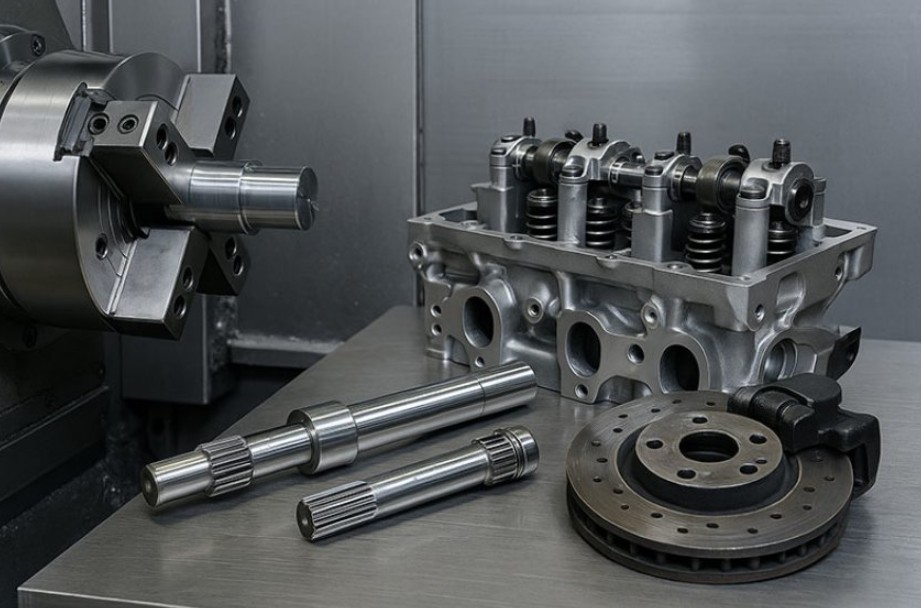
Industries that rely on rotationally symmetric components continue to expand rapidly. Precision shafts, connectors, threaded fittings, bushings, valve components, and miniature metal parts are widely used in robotics, medical instruments, EV systems, pneumatic equipment, and sensor technology.
The challenge for manufacturers is not only producing these parts accurately but doing so consistently across medium- and high-volume production.
This is where professional CNC turning operations provide major advantages:
Stable dimensional consistency
High concentricity and surface finish quality
Efficient production for complex cylindrical parts
Better repeatability between batches
Reduced secondary operations
Faster scalability from prototyping to mass production
Modern manufacturers increasingly value machining suppliers that understand Design for Manufacturability (DFM) principles and can help optimize part geometry before production begins. Engineers in the manufacturing sector often emphasize that practical machinability and process planning directly affect production efficiency, inspection reliability, and final product quality.
Why CNC Turning Services Matter More in Today’s Supply Chain
In the past, many OEMs sourced machining work primarily based on cost. That mindset is changing quickly.
Manufacturers now face tighter delivery schedules, stricter quality documentation requirements, and increasing pressure to reduce assembly failures caused by inconsistent components. As a result, stable machining capability has become strategically important.
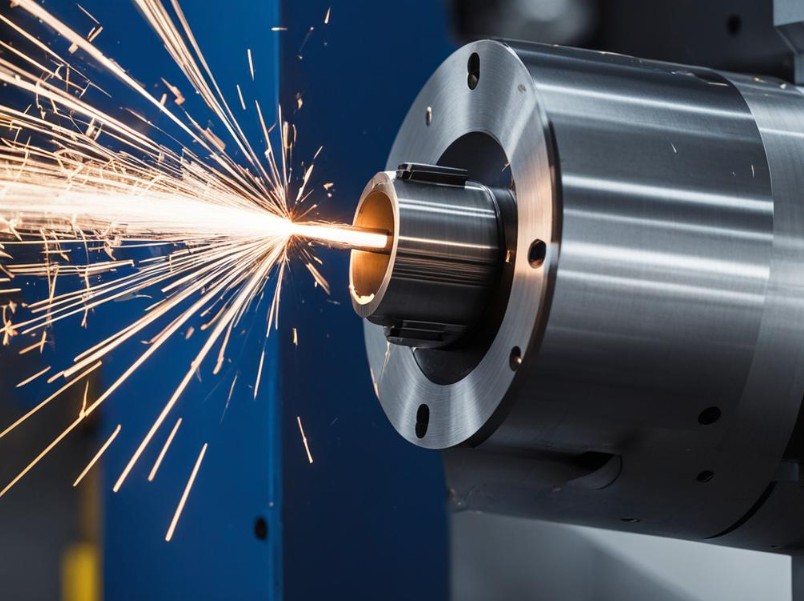
A professional CNC turning service provider can support production reliability by combining advanced turning centers, process engineering, and quality inspection systems into a repeatable workflow.
This matters particularly for industries where even small dimensional deviations can create downstream assembly issues or performance failures.
Several trends are accelerating the importance of precision turning:
1. Miniaturization of Industrial Components
As products become more compact, machining tolerances become increasingly demanding. Miniature turned parts used in electronics, medical systems, and automation equipment require exceptional stability during machining.
2. Material Complexity
Modern applications often involve stainless steel, titanium, brass, copper alloys, engineering plastics, and hardened materials. Each material requires different tooling strategies and process control methods.
3. Multi-Process Integration
Advanced turning centers now integrate milling, drilling, threading, and secondary machining within a single setup. This improves precision while reducing handling errors and production time.
4. Demand for Process Consistency
Manufacturers no longer want suppliers that can only produce a “good sample.” They need suppliers capable of maintaining consistency across thousands of production parts.
Precision Turned Parts in High-Performance Industries
Precision machining has become especially important in industries where reliability directly affects operational safety or product performance.
For example:
Medical components require burr-free surfaces and tight dimensional control
Automotive systems require repeatable precision for large-volume production
Aerospace assemblies demand strict traceability and process stability
Industrial automation relies on precise mating components for long-term reliability
The ability to manufacture precision CNC turned parts with stable tolerances and repeatable quality has become a competitive advantage for OEM manufacturers worldwide.
Manufacturing engineers frequently note that real production success depends not only on CAD design but also on understanding how components behave during actual machining and inspection processes.
Automation and Smart Manufacturing Are Reshaping CNC Turning
Manufacturing is entering a new phase driven by automation, digital process monitoring, and intelligent production systems.
Recent research in manufacturing automation highlights the growing role of model-driven engineering, integrated manufacturing systems, and AI-assisted process optimization in modern production environments.
In CNC turning operations, this evolution includes:
Automated bar feeding systems
Real-time tool wear monitoring
In-process inspection
Digital production tracking
Adaptive machining strategies
Integrated CAD/CAM optimization
These technologies improve production stability while helping manufacturers reduce scrap rates and machine downtime.
However, automation alone is not enough. The most effective machining suppliers combine advanced equipment with experienced engineering teams that understand tooling behavior, material machinability, tolerance stack-up, and production optimization.
That balance between technology and manufacturing expertise is what separates commodity machining from high-level precision manufacturing.
Surface Finish and Tolerance Control Remain Critical
One area often underestimated in machining is the relationship between surface finish, dimensional accuracy, and assembly performance.
Poor surface quality can affect:
Seal performance
Friction behavior
Corrosion resistance
Fatigue life
Assembly fit
Precision CNC turning processes help manufacturers achieve consistent finishes while maintaining critical dimensional requirements.
This is especially important for manufacturers producing CNC turning precision parts used in demanding mechanical systems where reliability and repeatability directly affect operational performance.
As tolerances continue tightening across industries, machining strategy, tooling selection, coolant control, and inspection procedures become increasingly important factors in manufacturing success.
The Future of CNC Turning in Advanced Manufacturing
The future of manufacturing will likely depend on a combination of:
Precision engineering
Smart automation
Flexible production systems
Faster prototyping capability
Integrated quality control
Sustainable manufacturing efficiency
CNC turning technology will continue playing a central role in this transformation because rotational precision components remain essential across nearly every industrial sector.
Manufacturers that invest in process stability, engineering support, and advanced machining capability will be better positioned to meet evolving customer expectations in the coming years.
In an increasingly competitive manufacturing landscape, precision is no longer just a technical requirement — it has become a business advantage.