How Advanced Materials and Precision Machining Are Shaping the Future of Manufacturing
The manufacturing engineering landscape is undergoing a transformation that extends well beyond the factory floor. Supply chain disruptions, shifting trade policies, and the relentless push for greater efficiency have forced manufacturers to rethink not just where they produce, but how they engineer components for the demands of tomorrow. At the center of this shift lies a fundamental reality: precision machining is no longer a support function—it is a strategic capability that determines whether a company can bring new products to market reliably, cost-effectively, and on schedule.
Across industries, the direction is clear. Components are becoming smaller, more intricate, and more demanding. Electric vehicles require lightweight structural elements and sophisticated thermal management systems. Medical devices demand biocompatible surfaces and tolerances measured in microns. Aerospace parts must perform under extreme conditions while minimising weight. Each of these sectors depends on precision-machined components made from specific materials, and the manufacturers that have mastered those materials are the ones winning the most demanding work.
Aluminium: The Backbone of Lightweight Engineering
Aluminium has become indispensable across automotive, aerospace, electronics, and medical manufacturing. Its combination of low density, good strength, and excellent thermal conductivity makes it the material of choice for applications where every gram counts. Electric vehicle battery housings, motor frames, and cooling plates are increasingly specified in aluminium alloys. Aerospace structural components and medical instrument housings follow the same trajectory.
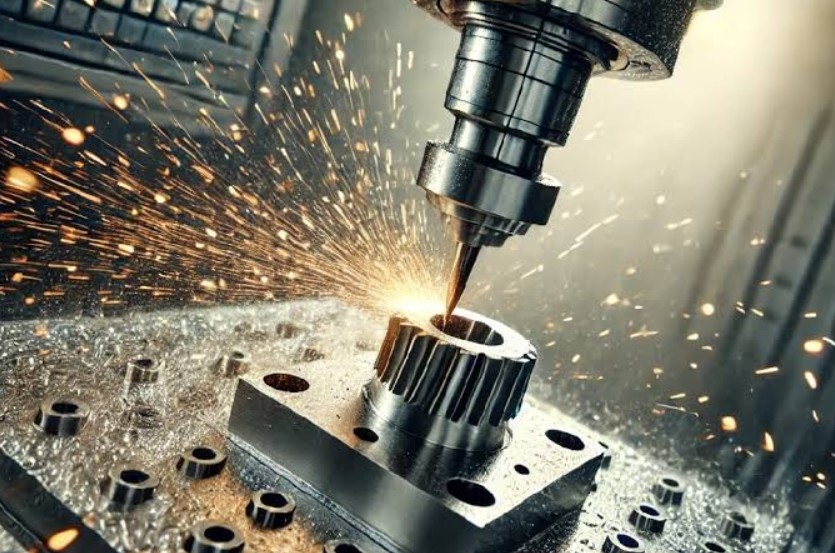
However, machining aluminium is more complex than many assume. High-speed cutting demands careful chip control and effective coolant delivery to prevent built-up edge. Different alloys behave differently—what works for 6061 may not suit 7075, and each grade requires specific tool geometries and feed rates. Shops that have developed robust processes across multiple aluminium grades deliver consistent surface finishes and tight dimensional control, even at high production volumes. For engineers and procurement teams, partnering with a specialist in aluminum CNC machining service can mean the difference between predictable production and recurring quality issues.
Copper and Brass: Essential for Electrification and Connectivity
Copper and brass alloys are vital to the electrification of transport, the expansion of renewable energy, and the proliferation of connected devices. Their excellent electrical and thermal conductivity makes them the first choice for connectors, terminals, busbars, heat exchangers, and RF components. The growing copper content in electric vehicles—substantially higher than in internal combustion vehicles—has intensified demand for precision-machined copper and brass parts.
These materials present unique machining challenges. Copper is gummy and tends to produce long, stringy chips that can wrap around tools and disrupt automated cycles. Brass, while more free-cutting, still requires sharp tooling and effective chip evacuation to achieve clean surfaces and tight tolerances. A poorly machined copper connector can fail under vibration; a rough brass fitting can compromise a fluid system. Suppliers that have documented machining parameters for these alloys and developed reliable secondary finishing processes are better equipped to deliver consistent quality. Experienced buyers know to seek out a reliable shop for brass and copper machining components to avoid the surface finish and tool wear problems that plague less prepared manufacturers.
Swiss Machining: Precision at Scale
For components that demand the highest levels of accuracy, Swiss-type machining has become the technology of choice. Originally developed for watchmaking, Swiss turning uses a guide bushing to support the workpiece immediately adjacent to the cutting tool. This design eliminates deflection and vibration, making it possible to hold tolerances that conventional turning cannot achieve—particularly on long, slender parts.
The applications are extensive. Surgical instruments, implantable device components, fibre optic connectors, and miniature fluid power fittings all rely on Swiss machining. The method’s ability to produce complex geometries in a single setup, combined with automated bar feeding and in-process probing, makes it ideal for high-volume production of mission-critical parts. For companies developing next-generation medical devices or precision electronics, a provider of precision Swiss machined components offers the combination of accuracy and repeatability that these applications demand.
What This Means for Manufacturing Engineers
For professionals in manufacturing engineering, the implications are clear. The trend toward tighter tolerances, more exotic materials, and higher production volumes is not slowing down. The shops that succeed in this environment are those that have invested not only in multi-axis CNC equipment and automated inspection but also in the process knowledge that turns difficult materials into consistent, high-quality parts. They understand that material expertise is not an add-on—it is the foundation of predictable production.
When evaluating potential partners, look beyond the machine list. Ask about documented experience with the specific alloys you use. Review quality systems and traceability procedures. Assess the ability to scale production without sacrificing tolerances. The answers will tell you whether you are dealing with a true manufacturing partner or just another supplier. In an era where every component counts, material expertise and machining capability are the new battlegrounds—and the companies that master them will lead their industries forward.