The New Frontier in Precision Manufacturing: Material Expertise in an Era of Reshoring and Digital Transformation
For decades, the blueprint for industrial sourcing followed a familiar pattern: design a part, send the drawing to the lowestcost region, and wait. That model has been dismantled. Geopolitical tensions, supply chain disruptions, and an accelerating push toward electrification have forced manufacturers to rethink not only where components are sourced but also what kind of technical capability their partners must possess. Across every major industry, the bar for precision has risen sharply, and the companies that succeed are increasingly those that pair advanced equipment with deep material expertise.
The numbers tell the story. The global precision turned product manufacturing market—covering everything from medical implant screws and aerospace fittings to EV battery connectors and sensor housings—was valued at $121.05 billion in 2025 and is forecast to reach $172.31 billion by 2031, growing at a 6.06 percent compound annual rate. This expansion is not about volume alone. It marks a fundamental shift toward precisionengineered parts that support aerospace recovery, electricvehicle drivetrain complexity, and the ongoing miniaturization of implantable medical devices. For suppliers, this means component tolerances are tighter than ever, and material behavior has become a critical differentiator.
Aluminum: The Lightweight Workhorse Meets New Demands
Aluminum has long been valued for its strength to weight ratio and machinability, but the push toward lightweighting in aerospace and electric vehicles has raised expectations dramatically. The global aluminum CNC machining services market was estimated at $3.57 billion in 2025 and is projected to grow at a 7.2 percent CAGR, driven by demand for thinner, more complex components with tighter flatness and concentricity standards. Electric vehicles, in particular, are reshaping aluminum demand: EVs require 30 to 50 percent more aluminum content per vehicle than internal combustion vehicles, and those components—battery housings, cooling plates, structural brackets—demand micronlevel precision across high volume runs.
The challenges, however, are not trivial. Highspeed machining at 10,000 RPM or above requires careful chip evacuation to prevent recutting and surface defects. Thermal expansion, while less severe than with harder alloys, still demands compensation on precision features. Shops that have developed robust highspeed protocols deliver better surface finishes and tighter dimensional control. That is why engineers working on demanding lightweight applications increasingly turn to an experienced aluminum machining provider who understands that aluminum’s “forgiveness” has limits—and who has the process discipline to maintain consistency across production runs of tens of thousands of units.
Copper and Brass: Essential Alloys for Electrification
Copper and brass alloys are no longer niche materials. The global copper alloy market was valued at $158.84 billion in 2025 and is projected to reach $239.45 billion by 2032, growing at a 6.03 percent CAGR. What is driving this expansion? Electrification, for one—renewables, rail, data centers, and EVs all require highconductivity components. Miniaturized electronics demand highcycle mating reliability. And corrosiveservice applications increasingly specify nonferrous materials where lifecycle value outweighs initial cost.
Yet machining copper and brass alloys presents distinct difficulties. Copper is gummy—it tends to smear rather than shear cleanly, producing long stringy chips that wrap around tools. Brass, while more machinable, still demands sharp tooling and proper chip evacuation to prevent surface galling. A poorly machined brass fitting can compromise an entire fluid control system. A copper connector with a rough surface finish may fail under vibration in missioncritical telecommunications networks. This explains why procurement specialists seek out a reliable machining partner for copper and brass components—one that has already solved the chipmanagement and toolwear challenges that catch less experienced shops off guard.
Swiss Type Machining: The Technology Behind Consistent Precision
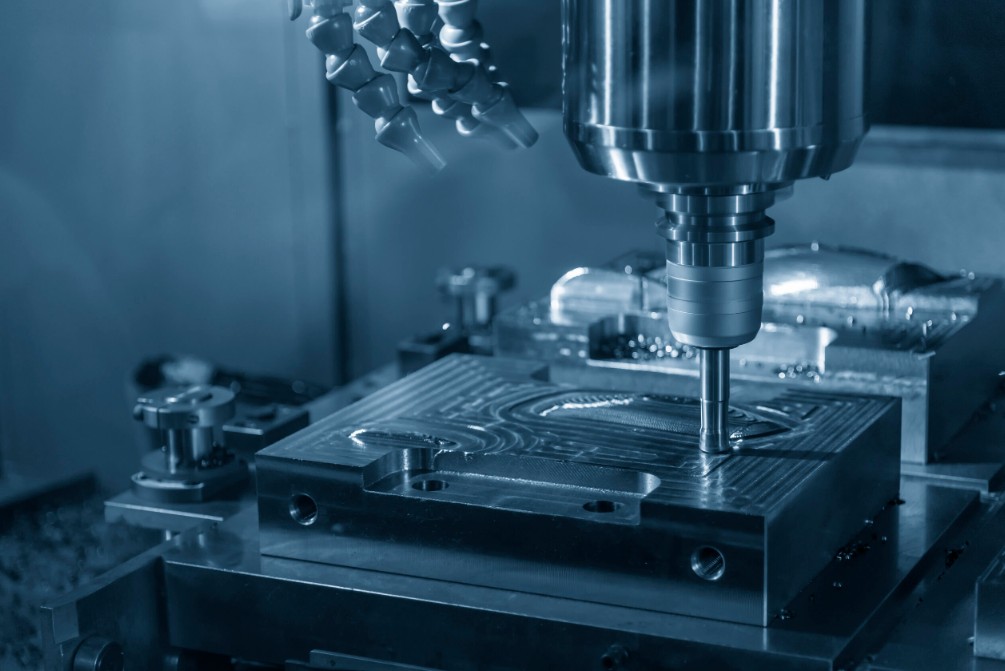
Across both aluminum and copperbased alloys, the enabling technology is Swisstype turning. Unlike conventional lathes where the workpiece extends unsupported from the chuck, Swiss machines feed material through a guide bushing positioned immediately next to the cutting tool. This design eliminates deflection, making it possible to hold tolerances as tight as ±0.005 millimeters on parts twenty times as long as their diameter. The global Swiss turn system market was valued at $2.4 billion in 2026 and is projected to reach $4.1 billion by 2034, at a 6.8 percent CAGR, driven by the rising need for complex, tighttolerance machining capabilities. Medical device manufacturing is the fastestgrowing application segment, fueled by demand for minimally invasive surgical components and microprecision parts. The automotive sector remains the largest contributor, driven by EV drivetrain miniaturization.
For manufacturers working across multiple material families, the ability to offer comprehensive Swiss machining solutions has become a strategic asset. Multiaxis Swiss lathes, automated bar feeders, and inprocess probing make it possible to turn, mill, drill, and inspect complex parts in a single setup—reducing tolerance stackups and dramatically shortening lead times.
The Reshoring and Digital Manufacturing Imperative
All of this is unfolding within a larger supply chain transformation. According to the Capgemini Research Institute’s 2026 report, 73 percent of large organizations now have a reindustrialization strategy in place or under development, up from 59 percent in 2024. In the United States, reshoring activity has accelerated significantly—48 percent of organizations report investments in domestic capabilities, up from just 30 percent in 2025. In Europe, reshoring has risen from 34 percent to 42 percent.
Yet ambition is running ahead of execution. The U.S. faces a projected deficit of 2.1 million manufacturing roles by 2030, with precision machining topping the hardtohire list. This talent gap has created a premium for shops that have invested not only in equipment but also in skilled workforces and automated quality systems.
Technology is stepping into the gap. By 2026, AIdriven machining has moved from experimental to operational, with realtime sensor feedback adjusting feeds, speeds, and toolpaths automatically. Predictive maintenance algorithms analyze vibration and power consumption to anticipate failures before they disrupt production. The adoption of these advanced manufacturing technologies is no longer optional—87 percent of organizations plan to invest in AI, automation, and digital twins to offset higher production costs closer to end markets.
The Path Forward
The next 18 months will likely determine which manufacturing partnerships deliver durable advantages. Demand signals are clear: precision turned products are moving toward tighter tolerances, more exotic materials, and higher production volumes. Regionalization is not a shortterm trend but a structural realignment. And the technology required to meet today’s specifications is well understood—but it requires sustained capital investment and process discipline.
For engineering leaders, the key is to look beyond price sheets and assess potential partners on material expertise, quality infrastructure, and the ability to scale production without variability. In an era where every component matters, those who secure the right partnerships early will be the ones leading their industries.